GD Dual Camera Housing
Project context
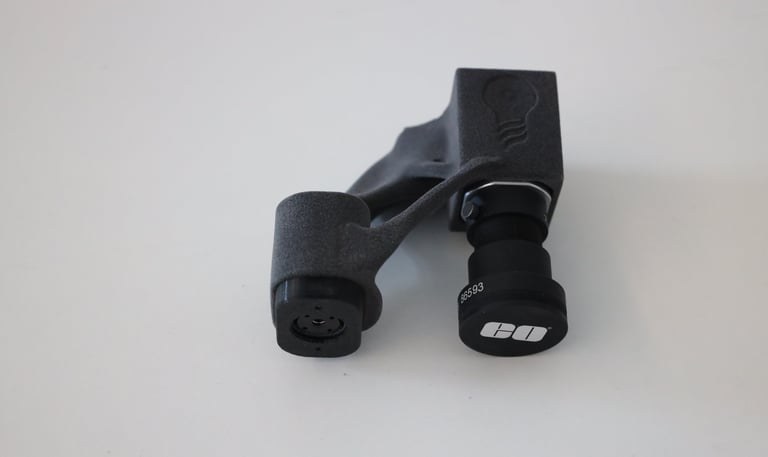
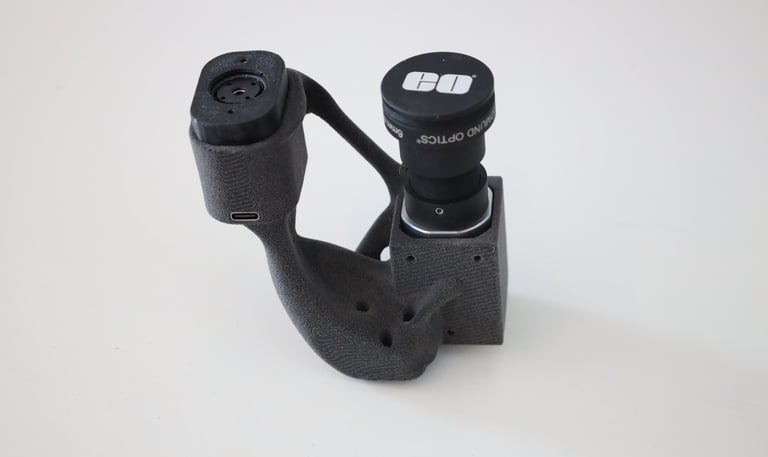
For the Dutch police, I developed a dual camera housing designed for use on a large 3-axis gimbal mounted on an RC vehicle. The housing had to withstand impacts, absorb vibrations for stable videography, and remain lightweight to avoid unbalancing the gimbal.


Approach
Following the IPO design process, I used generative design and topology optimization to create a structure that reduced weight while protecting the cameras. The housing was produced using TPU laser printing, ensuring strength and flexibility.
Due to confidentiality agreements, specific technical requirements, components, and performance results cannot be disclosed.
Tools & Techniques
IPO design process
Generative design & topology optimization
CAD modeling
Vibration and impact absorption design
Integration of infrared and standard cameras
TPU laser printing
Outcome
Reflection
The final product was a lightweight, TPU laser-printed camera housing, optimized for stability and durability. Its reduced weight lowered the gimbal’s power consumption and improved balance, ensuring smooth, high-quality video output even in demanding environments.
This project further strengthened my expertise in simulation-driven design and additive manufacturing. It taught me how to integrate electronic components into a structural design while ensuring durability, vibration control, and manufacturability.